

The Timeline of the Discovery and Progress of Aromatherapy

Our earth is a beautiful and amazing place. It is rich with all forms of natural resources. One of its natural resources is herbs that benefited mankind for thousands of years in the field of natural healing. Herbs have been used in different parts of the world since ancient time.
According to Archaeologists, archaeological evidence suggests that the use of herbs dates back as far as 60,000 years ago. This is potentially the earliest evidence of human beings using herbs in our history.
In Mesopotamia, the written study of herbs dates back over 5,000 years to the Sumerians, who created clay tablets with lists of hundreds of medicinal plants (such as myrrh and opium).
In India, it is common in the practice of Ayurveda to use different types of herbs such as turmeric, triphala, trikatu etc. and such usage started possibly as early as 4,000 B.C.
In China, the "Shennong Ben Cao Jing" lists 365 herbs and their uses - including Ephedra (the shrub that introduced the drug ephedrine to modern medicine), hemp, and chaulmoogra (one of the first effective treatments for leprosy). Frankincense has been a staple ingredient in Traditional Chinese Medicine since at least 500 B.C.
In the Middle East and North Africa, both frankincense and myrrh have been traded for over 5,000 years. It is believed that the Babylonians and Assyrians burnt them during religious ceremonies. The ancient Egyptians purchased plenty of resins from the Phoenicians to use them in incense, insect repellent, perfume and salves for wounds and sores. These were also used as key ingredients in the embalming process. Myrrh oil is an ideal ingredient for rejuvenating facial treatments. Frankincense on the other hand was charred and ground into a powder to produce the kohl eyeliner that Egyptian women commonly put on.
The walls of the temple dedicated to Queen Hatshepsut, who ruled Egypt for around 2 decades until her death around 480 B.C., are also decorated with murals depicting sacks of frankincense and potted saplings of myrrh-producing trees.
According to the Hebrew Bible, Frankincense and Myrrh were components of the holy incense ritually burned in Jerusalem’s sacred temples during ancient times. The ancient Greeks and Romans also imported massive amounts of the resins, which they burned as incense, to use them during cremations and in the treatment of a wide variety of ailments.
By then, medical practitioners had already recognised and documented the properties of these substances as being antiseptic, anti-inflammatory and analgesic, and hence, prescribed them for a variety of health conditions and diseases. These ranged from indigestion and chronic coughs to haemorrhoids and halitosis.
According to Touwaide (a historian of medicine at the Institute for the Preservation of Medical Traditions and the Smithsonian Institution), myrrh appears with more frequency than any other plant substance in the writings of the Greek physician Hippocrates, commonly called the "father of medicine" practised fumigation for both aromatic and medicinal benefit. He revolutionised the field of medicine in the 3rd and 4th centuries B.C.
The Roman Empire built upon the knowledge of the Egyptians and Greeks. Discorides wrote a book called 'De Materia Medica' that described the properties of approximately 500 plants. 'De Materia Medica' was one of the most important botanical books ever published in history, and was taken as the cornerstone of botanical medicine throughout Europe for 1,500 years. Discorides also studied distillation, which at that time, only focused on extracting aromatic floral waters and not essential oils.
A huge turning point for the distillation of essentials came about with the invention of a coiled cooling pipe in the 11th century. Persian by birth, Ibn Sina, known throughout Europe as Avicenna (980-1037) invented a coiled pipe that allowed the plant vapour and steam to cool down more effectively than previous distillers that employed a straight cooling pipe. Avicenna's contribution led the way in the discovery of essential oils and their benefits. His contribution earned him the title, the "Prince of Physicians". Throughout his life, he had also written 20 books covering theology, metaphysics, astronomy, philology, philosophy and poetry, and most influentially, 20 books and 100 treatises on medicine.
In the 12th century, an Abbess of Germany named Hildegard grew and distilled Lavender for its medicinal properties. In the 13th century, the pharmaceutical industry was born. This encouraged the major distillation of essential oils.
During the 14th century, the Black Death hit and killed millions of people. Herbal preparations were used extensively to help fight this terrible phenomenon that struck many. It is even believed that some perfumers successfully avoided the plague from their constant contact with natural aromatics.
More plants were distilled to create essential oils in the 15th century. This included Frankincense, Juniper, Rose, Sage and Rosemary. The world also saw an increase in the number of books written on herbs and their properties later in that century.
By the 16th century, it was possible for one to purchase oils at an "apothecary" (modern pharmacy), and many more essential oils were introduced. During the 16th and 17th centuries, perfumery became a form of art and it became more clearly defined as a distinctive field.
During the 19th century, perfumery remained a prosperous industry. Women would have their jeweller create a special bottle to hold their treasured perfume. The 19th century was also important scientifically as major constituents of essential oils became isolated.
The knowledge to separate the constituents of essential oils to create synthetic chemicals and drugs began in the 20th century. It is now widely believed that by separating the major constituents and then using the separate constituents alone or in a synthetic form will not only be therapeutically beneficial but also economical. These discoveries had contributed a lot to 'modern medicine' and resulted in the production of synthetic fragrances. Natural therapists however strongly believe that such separation actually weakens the properties of essential oils that are important in conferring one with the therapeutic benefits.
Famous French chemist and scholar René-Maurice Gattefossé had accidentally discovered in 1910 that Lavender essential oil can heal burns very quickly with very little scarring. What happened was Gattefossé was working in the laboratory when he burned his hand during his experiment. He immediately dipped his hand into the nearest tub of liquid, which happened to be the Lavender essential oil. Gattefossé was amazed at how quickly his burn was relieved with very little scarring. This incident led to his fascination of the healing properties of essential oils and inspired him to experiment them on soldiers during World War 1. He experimented with oils such as Lavender, Thyme, Lemon and Clove that had antiseptic properties. He noted an increase in the rate of healing for wounds treated with essential oils.
Gattefossé coined the term "Aromatherapy" in 1928 in an article where he supported the use of using essential oils without breaking them down into their primary constituents. In 1937, he wrote a book called 'Aromathérapie: Les Huiles essentielles hormones végétales' that was later translated into English and named 'Gattefossé's Aromatherapy'. This book is still in print and is widely read all around the world.
Other highly respected 20th century aromatherapists include (but not limited to) Jean Valnet, Madam Marguerite Maury, and Robert B. Tisserand.
Jean Valnet also used essential oils to treat injured soldiers during the war. He is also remembered for his book, 'The Practice of Aromatherapy', originally entitled 'Aromathérapie' in French.
Austrian Madam Marguerite Maury was a biochemist who avidly studied, practised and taught the use of Aromatherapy for cosmetic benefit. She was also the one who incorporated the practice of massage in the art of Aromatherapy in the 1930s.
Robert B. Tisserand, who is still alive and well today, is an English aromatherapist who was responsible for being one of the first individuals to bring the knowledge and education of Aromatherapy to English-speaking nations. He has written books and articles including the highly respected 1977 publication 'The Art of Aromatherapy'. This was probably the first Aromatherapy book published in English.
Up to around 30 years ago, while Aromatherapy existed, it was not commonly heard of in our families. As people's search for alternative therapies increased, the availability of information on essential oils and Aromatherapy also grew. The rich resources of books and researches done throughout the centuries enlighten us and the field of Aromatherapy is definitely flourishing. This is evident with the emergence of many different types of essential oils brand, perfumery etc.
Authors:
Tay Sim Yee (Sandhya Maarga Holistic Living Academy student for the Diploma in Aromatherapy course)
Copyright © 2018 Sandhya Maarga Holistic Living Resources
Holistic Living Annex (July 2018)
Bibliography
1. Aroma Web (1997), https://www.aromaweb.com/articles/history.asp
2. Cohen, Jennie. June 27, 2011, "A Wise Man’s Cure: Frankincense and Myrrh", https://www.history.com/news/a-wise-mans-cure-frankincense-and-myrrh.
3. Gattefossé, René-Maurice. Gattefossé's Aromatherapy. Saffron Walden, UK: The C.W. Daniel Company Limited, 1993.
4. Hong, Francis (2004). "History of Medicine in China" (PDF). McGill Journal of Medicine. 8 (1): 7984. Archived from the original (PDF) on 2013-12-01. https://web.archive.org/web/20131201231218/http://www.medicine.mcgill.ca/MJM/issues/v08n01/crossroads/hong.pdf
5. Lyth, Geoff Lyth (2003) “The History of Aromatherapy”, Copyright © Quinessence Aromatherapy Ltd.
6. Morgan, Leah. Clinical Aromatherapist, https://healingscents.net/blogs/learn/18685859-history-of-essential-oils
7. Oils and Plants, https://oilsandplants.com/gattefosse.htm
8. Oils and Plants, https://www.oilsandplants.com/maury.htm
9. Sumner, Judith (2000). The Natural History of Medicinal Plants. Timber Press. p. 16. ISBN 0-88192-483-0.
10. Tisserand, Robert B. The Art of Aromatherapy. Rochester, VT: Healing Arts Press, 1977.
11. Wynn, Susan G.; Barbara Fougère (2007). Veterinary Herbal Medicine. Elsevier Health Sciences. p. 60. ISBN 0323029981.
2. Cohen, Jennie. June 27, 2011, "A Wise Man’s Cure: Frankincense and Myrrh", https://www.history.com/news/a-wise-mans-cure-frankincense-and-myrrh.
3. Gattefossé, René-Maurice. Gattefossé's Aromatherapy. Saffron Walden, UK: The C.W. Daniel Company Limited, 1993.
4. Hong, Francis (2004). "History of Medicine in China" (PDF). McGill Journal of Medicine. 8 (1): 7984. Archived from the original (PDF) on 2013-12-01. https://web.archive.org/web/20131201231218/http://www.medicine.mcgill.ca/MJM/issues/v08n01/crossroads/hong.pdf
5. Lyth, Geoff Lyth (2003) “The History of Aromatherapy”, Copyright © Quinessence Aromatherapy Ltd.
6. Morgan, Leah. Clinical Aromatherapist, https://healingscents.net/blogs/learn/18685859-history-of-essential-oils
7. Oils and Plants, https://oilsandplants.com/gattefosse.htm
8. Oils and Plants, https://www.oilsandplants.com/maury.htm
9. Sumner, Judith (2000). The Natural History of Medicinal Plants. Timber Press. p. 16. ISBN 0-88192-483-0.
10. Tisserand, Robert B. The Art of Aromatherapy. Rochester, VT: Healing Arts Press, 1977.
11. Wynn, Susan G.; Barbara Fougère (2007). Veterinary Herbal Medicine. Elsevier Health Sciences. p. 60. ISBN 0323029981.
Monday, 23 July 2018
Read more...
Oil Pulling To Improve Dental Health and Overall Well-Being

(hla) Did you know that swishing / gargling oil in your mouth can improve your dental health and overall well-being? The swishing of oil in one's mouth is known as oil pulling in Ayurveda, the Indian Traditional Medicine system. It is also known as "kavala" or "gundusha".
Sunday, 13 September 2015
Read more...
Inositol, A Natural Cure for Depression?

Has a natural cure for depression surfaced today? Over the years, various researches have highlighted that the conventional anti-depressants sued to treat mental health diseases may do more harm than good.
Paul Andrews, an evolutionary biologist at McMaster University and lead author of an article published in the online journal Frontiers in Psychology, says that "...we need to be more cautious about the widespread use of these drugs."
Friday, 24 October 2014
Read more...
Is Vitamin C The Answer to Ebola?

(hla) WHILE it is commonly accepted that the Ebola disease has no proven cure, some doctors propose that Vitamin C may be effective in fighting against the Ebola virus.
Ebola continues to be a serious global concern as the Ebola death toll rises. There are no official trials yet testing Vitamin C against the Ebola virus but so far, there has been no virus that a sustained high dose of Vitamin C, administered either orally or intravenously, has not killed off.
Tuesday, 26 August 2014
Read more...
The Mind, Visualisation and Self-Healing
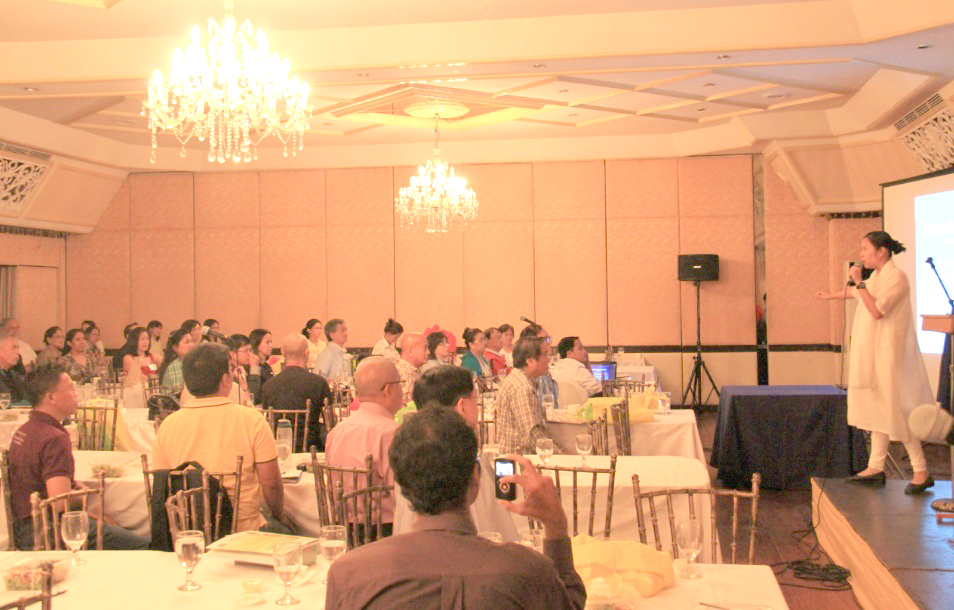
Spiritual Master for the Sandhya Maarga Mission and the founder of the Sandhya Maarga Yoga system, e-magazine Holistic Living Annex, Sandhya Maarga Holistic Living Academy, and international speaker and author Genevieve Tan Shu Thung was invited to the Philippines to provide several lectures in conjunction with this year's annual conference organised by the Philippines College of the Advancement in Medicine.
Friday, 29 November 2013
Read more...
Discovering Vibrational Medicine Workshop in Klang

(hla) Last month (October) on the 7th, a workshop on Discovering Vibrational Medicine was organised by the Sandhya Maarga Holistic Living Academy at the Sandhya Maarga Holistic Wellness Centre.
Three speakers, Dr. Genevieve Tan Shu Thung, Dr. Erwin Torres and Silambarasu Karuppiah, conducted the workshop to educate the public on the position and effectiveness of vibrational medicine in society today.
Wednesday, 6 November 2013
Read more...
Discovering Vibrational Medicine Workshop

(hla) Sandhya Maarga Holistic Living Academy is organising a workshop on "Discovering Vibrational Medicine" this coming October.
To understand health, we must understand what vibration is and how it affects our physiology. Come join Dr. Genevieve Tan Shu Thung (Malaysia) and Dr. Erwin Torres (Philippines) and explore the reality behind our physical state and what we can do to correct any imbalance.
Thursday, 12 September 2013
Read more...
Introduction to Naturopathy, "Natural Cure"

Naturopathy is a system of medicine that relies upon the use of only ‘natural’ substances for the treatment of disease, rather than drugs. These may include the employment of various systems of natural treatment, which are prudently utilised to rid the body of ‘unnatural’ substances, believed to be the root of most illnesses.
According to the Association of Accredited Naturopathic Medical Colleges, naturopathy is basically a system of medicine defined by principles rather than by methods or modalities, which honours the body’s innate wisdom to heal. A naturopath can therefore help alleviate the suffering and combat diseases without the consumption of poisonous drugs and causing injury to the patient.
Monday, 19 August 2013
Read more...
Healing Powers of Hot Water

The healing powers of hot water is synonymous with the hot water therapy. It is a new scientific discovery and has been assimilated as being part of the Hydro-Thermal Therapy, which is a combination of:-
a) The Methods of Drinking Hot Water.
b) The Hydro-Thermal Air Therapy (a combination of Hydro-Thermal Towel Therapy and Thermal Air Therapy.)
c) The Hot Water Steam Therapy
The human brain is the most unique organ, which no one to date has ever discovered its full potential. Not only does the brain emit hormones, it controls the flow of these hormones throughout the human body. It is the most sensitive and delicate organ that I have ever come across according to my own personal scientific discovery. Regardless, what makes it interesting is that this delicate organ is able to carry out spectacular functions throughout the entire history of mankind.
Friday, 5 April 2013
Read more...
Detox by Fasting

Fasting is defined as a willing abstinence from some or all food, drink or both, for a period of time. According to the principles of Alternative Medicines, the act of fasting is by itself therapeutic as it is beneficial for the health. Fasting helps purify and rejuvenate the body by eliminating toxic waste matters and regenerating new cells to replace the old diseased ones.
Tuesday, 19 February 2013
Read more...


Join our Group to Connect with 1,700++ MEMBERS...

OR LIKE our new Facebook Page below...
Recently Commented
Recent Entries
Inspirational Gallery
